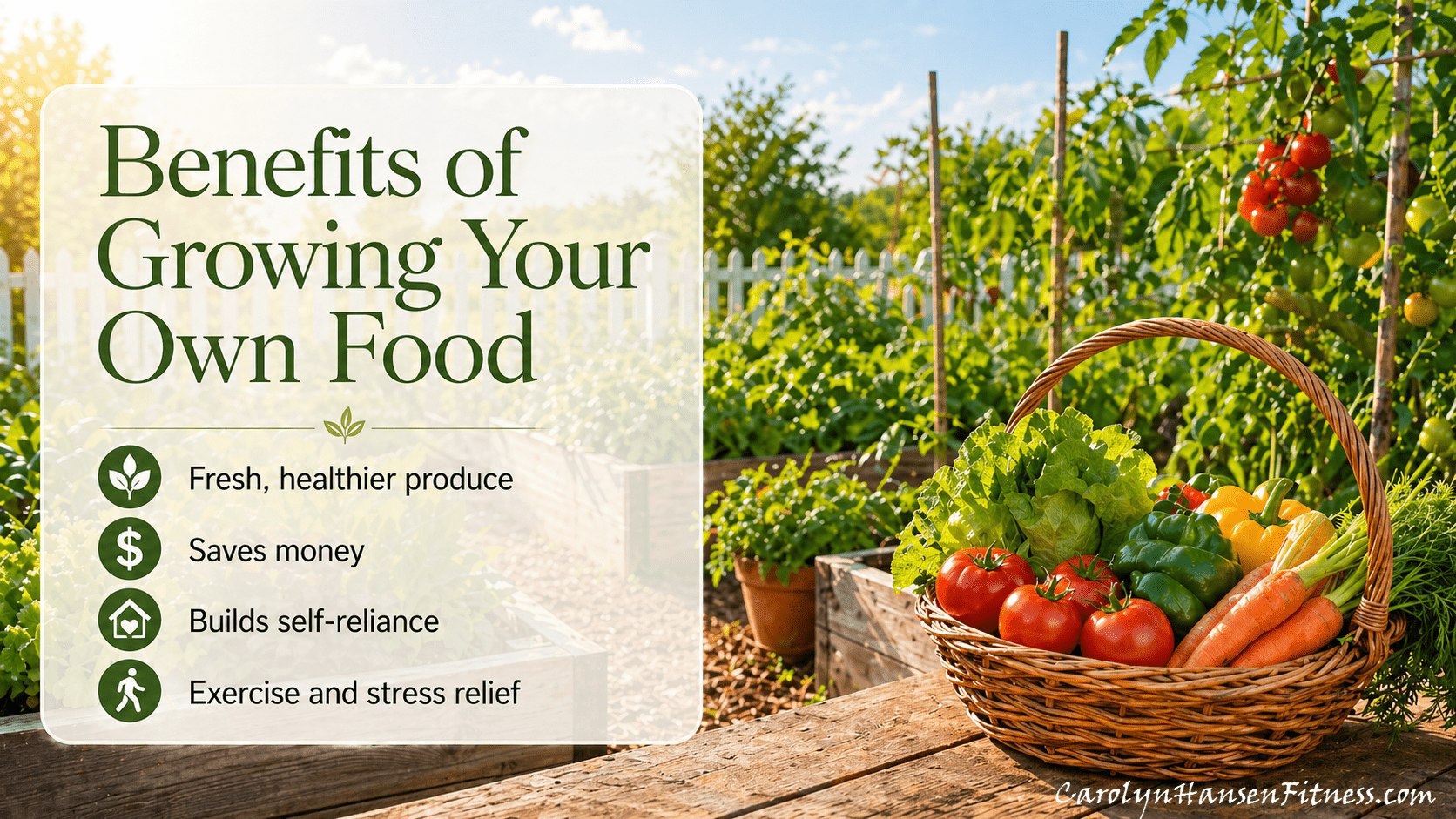
In an uncertain world, where food prices continue to rise and families are feeling the pressure of stretching every dollar, learning how to grow a home garden is one of the most practical and empowering steps you can take.
Gardening is a JOY –
A home vegetable garden does not have to be large or complicated to make a difference. Even a few containers on a patio, herbs in a sunny window, or a small raised bed in the backyard can help provide fresh, nourishing food for your family.
The desire to access fresh, healthy food is far more than just a passing trend. It is becoming a practical and necessary step toward greater independence, better health, and peace of mind. Now is the perfect time to become a little more self-sufficient and feed your family at the same time. Maintaining a garden is a wonderful way to spend more time outdoors, get fresh air, move your body, and bring the family together around something useful and life-giving.
There is something very reassuring when you know where your next meal is coming from and a quiet confidence that comes from stepping outside and picking fresh lettuce, tomatoes, herbs, peppers, or strawberries from your own space.
Even if your garden only provides a small portion of your food, it still makes a difference.
Food is absolutely essential to life, and it is wise to have basic food stores in your home to provide for your family in times of need. Everyone should grow a garden because it puts a little more control back into your own hands.
Perhaps the most obvious reason is that it provides health benefits. Growing food yourself allows you to avoid pesticides and removes many of the unknowns that come with store-bought produce. When you grow food at home, you know where it came from, how it was grown, and what was used on it.
Benefits of Home Gardening –
Better Food Equals Better Health
It’s pretty simple really. Growing your own vegetables gets more vegetables onto your dinner plate. When you have a fresh selection right outside your door, it becomes much easier to add them to soups, salads, stir-fries, omelets, smoothies, and everyday meals.
Fresh food also tastes better. A tomato picked warm from the vine, herbs snipped just before dinner, or lettuce harvested minutes before it reaches your plate has a flavor that store-bought produce often cannot match.
Eat Garden-Fresh Every Day
Growing your own food is an incredibly rewarding task. Imagine the joy that comes from cooking and eating the absolute freshest ingredients, grown and harvested by your own love and labor. Each meal can be healthy, nourishing, and delicious. You also have the peace of knowing you do not have to worry as much about pesticide residue, coatings, sprays, or other unknown chemicals in your food.
A handful of fresh herbs can brighten a simple meal. A few greens can turn leftovers into a nourishing salad. A basket of tomatoes can become sauce, salsa, soup, or a fresh side dish.
It Gets You Outside
So much of our time is spent in the car, in the office, or inside the house. Being in nature is like food for the soul, and gardening has been shown to reduce stress.
There is something calming about stepping away from screens, putting your hands in the soil, and working with living things. The garden asks you to slow down, breathe deeper, notice the weather, and pay attention to what is growing.
It’s Physical Activity
Getting out in the garden to water, weed, plant, prune, or harvest gives you valuable light exercise. Think bending, squatting, pulling, lifting, reaching, and walking. It keeps the body moving in a natural and useful way.
For example, hoeing is good for both the garden and the gardener.
Set aside a few minutes every fine day to hoe around your crops. Hoeing promotes air circulation and helps prevent the ground from becoming hard and less able to take in water when it rains. It also helps keep weeds from taking over before they become a bigger job.
You may not realize it, but squatting and bending to pull weeds can burn around 230 calories per hour. Plus, you are giving your legs, back, arms, and hands a good workout.
And, believe it or not, digging holes with a shovel can burn more than 500 calories per hour.
Even simple garden jobs like pulling weeds can help strengthen your grip, tone your arms, and keep your body moving.
The truth is, it is hard to think of a more rewarding form of exercise than gardening. You not only burn calories, you create something useful, beautiful, and nourishing at the same time.
Saving Money
Fresh fruits and vegetables can be expensive, especially if you choose organic produce. Growing your own food can help lower your monthly grocery bill and give you more control over what you eat.
Seed packets are often inexpensive, and a single packet can produce a surprising amount of food. Even a small garden can provide fresh herbs, greens, tomatoes, peppers, cucumbers, strawberries, and more throughout the growing season.
Reduce Your Environmental Footprint
Growing your own food also helps the environment in many ways. A home garden can support pollinators, birds, and other wildlife. It can reduce erosion, improve soil health, cut down on packaging waste, and lower the carbon emissions connected with transporting food long distances.
When food is grown close to home, there is less waste, less fuel used, and a deeper respect for the natural cycles that provide for us.
Connect Your Children To Their Food Source
Gardening is also a wonderful learning tool for families. Growing food together gives children a hands-on way to understand where their food comes from.
A survival garden can help create a deep and meaningful connection between your family, your food, and the earth. Children learn how seeds sprout, why plants need sun and water, how vegetables grow, and how much care goes into the food on their plates.
Research has also shown that children are often more willing to eat vegetables when they have helped grow them. A child who plants a seed, waters it, watches it grow, and finally picks the food is far more likely to taste and enjoy it.
One of the most important benefits of growing your own food may be what it does for your mental health. There is something deeply human about putting your hands in the soil, working with the earth, and watching life unfold in front of you.
There is something almost miraculous about placing a small seed in the ground and later harvesting a large watermelon, a basket of tomatoes, or a handful of fresh herbs for dinner.
As urban populations grow, food costs rise, economic uncertainty continues, and supply chains become less dependable, the desire to access fresh, healthy food becomes more important than ever. Growing food is not just a passing trend. For families with limited access to fresh produce, a garden can help ease the pressure, even if it does not replace the grocery store completely.
Now is the perfect time to become a little more self-sufficient and plant a vegetable garden that can help feed you and your family. Starting a garden is also a wonderful way to spend more time outdoors, move your body, reduce stress, and enjoy the peace of knowing that at least some of your food is growing right outside your door.
Additional Benefits of a Home Garden –
Garden-fresh produce provides necessary nutrients that stored foods are missing
Fresh fruits, vegetables, and herbs add variety and make cooked dishes taste better
Growing produce helps supplement and stretch your food supply
A garden can provide nourishing food while also supporting pollinators
Gardening builds a stronger connection to your food source
Gardening provides exercise, sunshine, fresh air, and stress relief
Scenarios That Make A Garden Important
It is impossible to know exactly what the future may hold. Any one of these things could seriously affect your family’s diet:
Unemployment or loss of income
Hyperinflation and rising food prices
Economic downturn, recession, or depression
Crop failure caused by flooding, drought, frost, or pests
Transportation problems such as fuel shortages, strikes, or supply delays
Long-term grid failure caused by cyber attacks, solar flares, or other disruptions
Supply shortages caused by war, increased demand, or trade restrictions
Growing your own food is one of the most practical steps you can take to prepare for emergencies.
And you do not need a large farm to begin. Whether you have a backyard garden, a small patio, a balcony, or even a sunny window box, you can grow something useful.
Fresh tomatoes, spinach, bell peppers, Swiss chard, cucumbers, strawberries, beans, lettuce, herbs, and many other foods can be grown in surprisingly small spaces.

Every seed you plant is a step toward greater independence, better health, and a stronger connection to the food that nourishes you.
A garden also gives you the comfort of knowing where at least part of your next meal is coming from. There is a quiet confidence that comes from stepping outside and picking fresh lettuce, tomatoes, herbs, peppers, or strawberries from your own space. Even if your garden only provides a small portion of your food, it still makes a difference.
There is also something deeply satisfying about eating food you have grown yourself. You know what went into the soil, what touched the leaves, and how the food was cared for. This is especially important for families who want cleaner, fresher produce without paying the high cost of organic fruits and vegetables every week.
And perhaps just as important, gardening brings people back into rhythm with nature. In a world that often feels rushed, uncertain, and disconnected, the garden teaches patience, responsibility, and trust. You plant the seed, tend the soil, water the roots, and wait. Then one day, life appears.
Whether you have a large backyard, a small patio, a balcony, or just a few containers near a sunny window, you can begin. Every plant you grow is a step toward better preparedness, better health, and a stronger connection to the food that nourishes your family.
It’s time to start your journey to health and fitness…
Self-Improvement Gifts is a Library of Free resources that can help with all your health and fitness needs. There’s no time like now to address what you’ve been putting off!